Content created by AI
Escalating Violence: Israel Intensifies Military Operations in Gaza, Widens Evacuations Amidst Growing Casualties
In the southern Gaza region, the sounds of war grow louder and more frequent as the Israeli military fortifies its campaign against Hamas, leading to escalating civilian displacement and fatalities. Gaza’s once dubbed 'safe areas' are no more, as Israel calls for further evacuations while its military operations amplify, underscoring the deepening of a conflict that strains the limits of international law and humanitarian concerns.
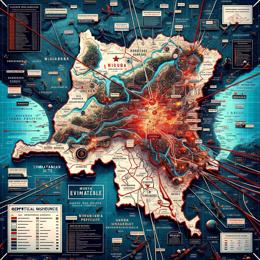
The latest military declarations, disseminated through social media platform X, highlight the Israeli army's attempt at guiding Gaza's civilians to presumed safety by identifying evacuation zones. Yet, these efforts have led to confusion rather than clarity. A recently published map divided Gaza into some 2,500 grid zones, receiving criticism for its complexity. Moreover, sporadic internet and electricity have impeded Gazans' ability to stay abreast of these fast-evolving declarations, as reported by on-the-ground Al Jazeera journalists.
The intensification of the conflict comes in the wake of a brief cessation of violence, which had been given effect to facilitate a significant prisoner exchange — approximately 105 Israelis for 240 Palestinian captives. However, the region's fragility was cast into sharp relief as Gaza's Ministry of Health reported more than 15,500 people dead since the beginning of the conflict, a toll that includes the latest overnight airstrike fatalities.
Israel's expansion into previously designated 'safe' areas, especially targeting the city of Khan Younis, has precipitated the mass displacement of Palestinians. With their homes no longer tenable, thousands head towards the city only to find themselves still within the radius of conflict.
In the occupied West Bank, Israeli security force raids have intensified in tandem, leading to a spate of arrests and further casualties. Palestinian officials and Al Jazeera correspondents reported on the escalation of violence, which includes the detainment of at least two Palestinians killed in a Qalqilya raid and the retention of bodies by Israeli forces — a practice confirmed by local sources and reporters in Hebron.
The confluence of these events paints a distressing picture of a region under siege, a narrative supported by figures such as the more than 3,500 Palestinians arrested since October 7, often without charges, and the West Bank's death toll of 256 Palestinians, which includes six prisoners who died in Israeli custody.
As the Israeli military asserts its dominance in Gaza and the West Bank, tangible military accomplishments seemingly take a backseat to the unfolding humanitarian disaster. In the shadow of these military operations, the civilians of Gaza stand with fewer options for safety, their futures increasingly precarious amidst the rubble of war.
#GOOGLE_AD
Leave a Comment
Recent News