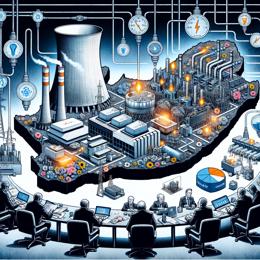
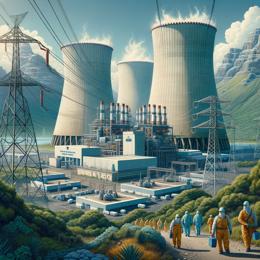
Image: AI generated for illustration purposes
The Strategic Dimensions of China’s Support to South Africa’s Energy Sector Amidst Eskom’s Crisis
In the shadow of crippling load-shedding that has cast a dark cloud over South Africa’s economy and public services, a gleam of temporary relief surfaces as China steps in with a significant offer of support. The Asian giant’s pledge comes in the tangible form of hundreds of generators, fueled by a R500 million donation, a remedy designed not just to brighten dimmed lights but also to power the undercurrents of deeper international cooperation.
The technical assistance, solidified during a state visit in August 2023, represents China’s hand in a partnership where benefits could stream far down the road - beyond the immediate electrification of schools, clinics, and courts that Eskom’s ailing infrastructure currently cannot guarantee. Embedded within this seemingly generous act lies an intricate web where future business opportunities with Chinese entities and political allegiance weigh heavily in the balance.
Electricity Minister Kgosientsho Ramokgopa has openly discussed financial strategies to bolster South Africa’s electricity grid, facilitating the connection of additional capacity amidst continuous blackouts. Concurrently, cohorts of Chinese experts have taken their reconnaissance through the heart of Eskom’s power plants, offering expertise that could not only revive the flagging turbines but also spin new tales of reduced emissions from coal-reliant powerhouses.
Despite Ramokgopa’s assurances of no strings attached, analysts like Chris Yelland discern the presence of invisible expectations, lubricating the gears of potential future transactions. With South Africa’s ideological compass finding more resonance with China’s coordinates than those of Western landscapes, Yelland articulates the unfolding scenario as a prelude to a more profound business enactment, tinged with political resonance.
Critics hitch their skepticism to these offerings, with experts like Hilton Trollip challenging proclamations of the deal's advantages and probing the transparency surrounding the agreement’s specifics. Educational facilities alone edge past the 23,000 mark, dwarfing the promised 300 to 450 backup units and raising questions about the distribution of true relief.
Questions also ripple through the intellectual murmurs of academia, where Professor Hartmut Winkler of the University of Johannesburg warns against an overreliance on external salvation for South Africa’s deep-seated energy predicaments. With the principle that there’s no such thing as a free lunch, especially in the political chessboard of global relations, the looming question remains: What might South Africa pledge in return for this timely support?
The Ministry of Electricity stands firm on the clarity of the agreement, pointing to the open signing ceremony as evidence of transparency. Nonetheless, with the details still cloaked from public scrutiny, the narrative of China’s humanitarian mask barely conceals the strategy of a chess grandmaster patiently advancing pawns forward. As the generators hum to life, South Africans must ponder the price of this power play, where today’s light could cast tomorrow’s shadow on national sovereignty and autonomy.
Leave a Comment
Recent News