Image: AI generated for illustration purposes
Global Oil Giants Commit to Decarbonization Measures at COP28
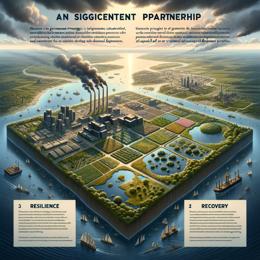
At the recent COP28 climate talks in Dubai, a significant promise was made by fifty oil and gas companies, who together account for 40 percent of the world's oil production, to decarbonize their operations and reduce methane emissions by 2050. This pledge manifests the industry's growing responsiveness to the imminent threat posed by climate change.
Key industry players such as Saudi's Aramco and ADNOC from the United Arab Emirates have stepped forward, signing the Oil and Gas Decarbonization Charter. The charter, a non-binding agreement, also seeks to eradicate the practice of routine flaring within this decade. It represents a turning point, especially for firms like Aramco, the world's largest oil company, which had previously committed to CO2 reduction targets that excluded emissions resulting from the end use of its products.
Other significant national oil companies are also signatories, including PetroChina, Brazil's Petrobras, Libya's National Oil Company, Malaysia's Petronas, Angola's Sonangol, and notable Western firms like France's TotalEnergies, U.S.-based ExxonMobil, and the UK's BP and Shell. The inclusion of these companies indicates a collective shift in an industry often criticized for its contribution to environmental degradation.
The pledge outlined in the charter was crafted over the year leading up to COP28, setting in motion a series of initiatives intended to expedite the energy sector's transition to lower carbon operations. Nevertheless, these commitments remain voluntarily, distinct from the binding consensus decisions undertaken by nearly 200 nations under the United Nations.
Despite the seemingly progressive stance of these oil giants, critics argue that these companies, especially national oil companies traditionally less scrutinized than Western counterparts, need to establish more concrete and obligatory measures. According to Melanie Robinson of the World Resources Institute, the charter does little more than highlight the insufficiency of industry-led voluntary commitments in driving the required ambition to decisively confront the climate crisis.
Her sentiment underscores a widespread concern that real change will not occur until governments enforce policies that usher in a swift and fair move away from reliance on fossil fuels. These policies, many argue, need to ensure that companies do not simply shift the emission responsibilities along the supply chain but address them in their entirety.
The collective effort amongst some of the largest oil and gas companies in the world to come together in the face of climate change is undeniably a step in the right direction. However, the broader picture painted by experts and environmentalists suggests that the strategies for reaching global climate goals need to be more aggressive and binding to effect the necessary change.
Leave a Comment
Recent News