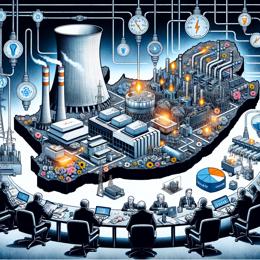
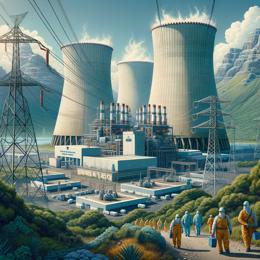
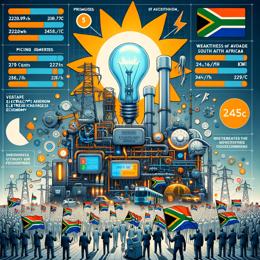
Image: AI generated for illustration purposes
South Africa's Eskom at a Crossroads: The Urgent Need for a Decommissioning Strategy
Eskom, South Africa's state-owned electric utility, is standing at a critical juncture. The company's aging coal-fired power fleet is in dire need of a clear and structured decommissioning plan. This need has grown increasingly urgent in light of the lack of public information regarding the retirement or life-extension of these facilities.
The energy landscape in South Africa is changing. As the country makes strides towards a more sustainable and environmentally friendly future, it faces the daunting task of transitioning from its heavy reliance on coal. The establishment of the Just Energy Transition Investment Plan (JET IP) and the Presidential Climate Commission's (PCC) report on the shutdown of the Komati power station signify steps towards this transition. However, they also highlight the absence of long-term planning necessary for a smooth evolution.
The decommissioning of the Komati power station in 2022 has set a precedent, but without a comprehensive plan, there is no telling which power stations will follow or when. This uncertainty looms over communities and the workforce associated with these plants. The potential socio-economic impact cannot be overstated; the risk is that hundreds, if not thousands, of South Africans could find themselves without employment or adequate support—a situation that should be avoidable with proper anticipation and preparation.
The decommissioning or refurbishment of power stations is not merely a logistical challenge – it is also a human one. It is crucial for Eskom to ensure not just the environmental and economic rationalization of power plant closures, but also the social aspects of these transitions. In this context, "Just Transition" goes beyond the introduction of renewable energy sources, encompassing the fair treatment and re-skilling of workers, as well as the sustainable development of communities that have, for decades, relied on coal for their livelihood.
Therefore, Eskom's task is multifaceted. It must establish a strategy that aligns with international environmental commitments, caters to national electricity demands, and safeguards the well-being of its people. The creation of a decommissioning roadmap should involve thorough consultation with all stakeholders, including labor unions, local governments, and civil society organizations. Transparency and communication will be critical in its implementation.
Financial planning is equally important. Decommissioning power stations and switching to renewable energy requires significant investment. Eskom must navigate its current financial challenges while obtaining the necessary capital for its transition plans. This includes ensuring that the utility does not burden consumers with excessive tariff increases as it seeks to stabilize its financial position.
The international community has shown support for South Africa's energy transition initiatives, recognizing the need for a balanced approach to sustainable development. The global shift to clean energy presents a unique opportunity for South Africa to reinvent its energy sector, boost economic growth, and play a leading role in the global movement against climate change.
The discussion surrounding Eskom's future and South Africa's energy landscape is not just about the environment or economics; it is about ensuring a smooth transition toward an energy future that is viable, just, and inclusive for all South Africans.
Leave a Comment
Recent News