Image: AI generated for illustration purposes
The Big ASS Trek: A Journey of Hope for Over 400 Donkeys
In a heartwarming tale of resilience and compassion, The Karoo Donkey Sanctuary has effectively executed what they affectionately called the "Big ASS Trek" – a massive rehoming project transporting 400 donkeys and various other farm animals from Plettenberg Bay back to their natural semi-desert habitat in Prince Albert, the Greater Karoo region.
The sanctuary, established in 2015, was compelled to move in 2021, due to an enduring drought that made living conditions for the donkeys unsustainable. Jonno Sherwin, Founder of the Karoo Donkey Sanctuary, unfolded the narrative behind the move in an interview with Sara-Jayne Makwala King, citing the unsuitability of the Plettenberg Bay’s wet climate for their semi-desert adapted donkeys. He also mentioned the sale of their rented property to a new owner who had alternative plans for the land.
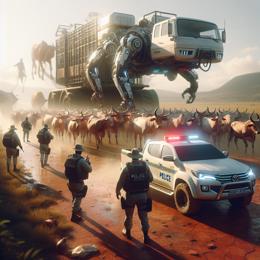
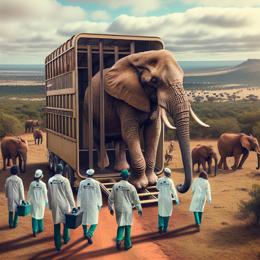
The Sanctuary's devotion to providing a permanent, legacy home led to the purchase of a farm abundant in water in Prince Albert, marking a new chapter for the animals and their carers. The shift wasn't trivial, as it necessitated around six weeks of strategic planning, the employment of specialized horse transporters, and the careful relocation of animals, some of which were fragile and staying in their ICU unit. This tremendous feat saw trucks shuttling back and forth across the Swartberg mountains for six consecutive days, ensuring every donkey, along with the carers and essential supplies, arrived safely to their new heaven on earth.
The donkeys’ arrival was nothing short of blissful, as captured in the videos posted by Sherwin on the Sanctuary’s Facebook page. Their evident happiness, he notes, is a stark contrast to their previous prospects, which, for many farmed animals, culminate at the slaughterhouse.
But the journey of these donkeys means more than just a change of scenery. It underscores a growing crisis involving the global donkey skin trade, particularly for the production of ejiao in China. This trade doesn't only impact animal welfare but also the livelihoods of rural communities in South Africa. Sherwin highlighted the socioeconomic repercussions, wherein women and children depend on donkeys for fetching water and transport.
Sherwin is adamant about the need for a significant shift in animal welfare laws to protect donkeys and the communities that rely on them. He mentions how ejiao can be produced using plant-based materials and underscores the importance of not casting general blame on the Chinese population but focuses on changing the policies and practices that perpetuate this trade.
The story of The Karoo Donkey Sanctuary is a tale of hope and victory filled with elements of animism and respect for all life forms. It’s a beacon, signifying the positive changes we can bring forth on this planet when we come together for a collective cause — a testament to the power of community and the enduring spirit of benevolence.
For more information on their mission and updates on the donkeys, supporters can visit karoodonkey.org and follow their Facebook page.
Leave a Comment
Recent News