Picture: for illustration purposes
South Africa Secures World Bank Loan for Energy Reformation
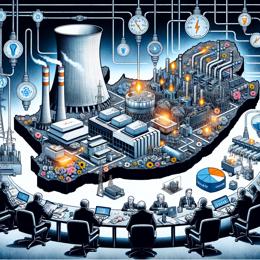
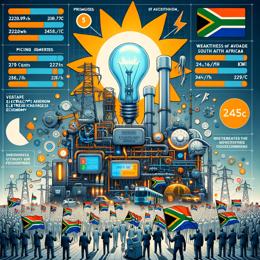
South Africa is set to receive a significant financial boost from the World Bank following the international institution's agreement to extend a $1bn (R19bn) Development Policy Loan. Aimed at promoting energy security and a low-carbon transition, this substantial amount will aid South Africa's restructuring of its power sector, broadening the power market, and will also act as a monetary catalyst in the direction of Eskom's resources towards the upkeep of existing power plants and investments in transmission.
Moreover, the loan also holds a vision for a low-carbon transition by incentivizing private investments in the renewable energy sector and solidifying carbon pricing instruments. As part of the initiative, the aid is set to support underprivileged households and businesses, particularly amplifying women and black women-owned ventures by providing them access to commercial bank credits. This move will enable these sectors to invest in solar technology, thereby encouraging renewable energy implementation at a grassroots level.
The deputy director-general for asset and liability management at the National Treasury, Mmakgoshi Lekhethe, expressed the critical timing of this loan for the nation, acknowledging that it will offer much-needed fiscal and technical support. It is expected to stimulate private sector involvement, alleviate the existing electricity crisis in the long term, and create job opportunities in the budding renewable energy market.
The World Bank, working collaboratively with the SA government, the African Development Bank, the German KfW Development Bank, and the government of Canada devised the operation. It is also planned for the SA government to receive technical assistance to identify forthcoming reforms needed manage the social costs tied to the decommissioning of coal-fired power.
World Bank country director for South Africa, Marie Francoise Marie-Nelly, applauded South Africa's government for taking determining reforms to tackle the challenges brought on by the current energy crisis, emphasizing that these reforms would bring benefits to the most vulnerable households, the economy, and the environment.
Leave a Comment
Recent News